Air power may either end war or end civilization.
Winston Churchill
House of Commons, 14 March 1933.
I hope you find what you are looking for. And maybe discover something you had no idea about!
There are 27 quotes matching Winston Churchill in the collection:
Air power may either end war or end civilization.
Winston Churchill
House of Commons, 14 March 1933.
Even the most eminent persons are subject to the laws of gravity.
Winston Churchill
While Prime Minister of the United Kingdom, while allowing himself to be buckled into a seatbelt for a flight from Athens to Naples, 28 December 1944. Quoted in Max Hastings’ Winston’s War: Churchill, 1940-1945.
I must place on record my regret that the human race ever learned to fly.
Sir Winston Churchill
Letter to Lord Bevearbrook, 26 September 1953.
Never in the field of human conflict was so much owed by so many to so few.
Prime Minster Winston Churchill
House of Commons, 20 August 1940. The Royal Air Force has been known as 'the few' ever since. Max Hastings in his book Winston’s War: Churchill, 1940-1945 states that Churchill came up with the phrase a few days earlier on 16 August, after visiting Fighter Command's 11 Group operation room. His chief of staff 'Pug' Ismay made some remark in the car riding back to Chequers, and Churchill said, “don’t speak to me. I have never been so moved.” After a few minutes silence, he first spoke the classic line.
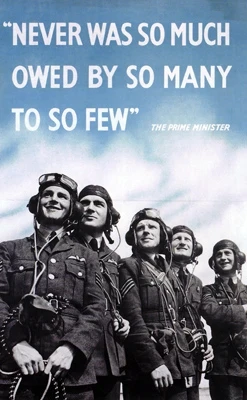
He may have been influenced by Sir John Moore’s declaration about the capture of Corsica in 1793, “Never was so much done by so few men”.
This great aviation quote is often changed by writers and speakers, giving us material such as ‘Never … was so much owed by so few to so many,’ seen after the Falklands War. Others have wondered if Churchill was referring to the RAF’s bar tab.
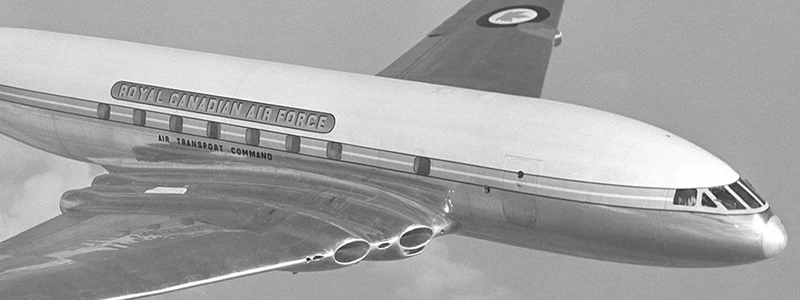
The cost of solving the Comet mystery must be reckoned neither in money nor in manpower.
Prime Minister Winston Churchill
Grounding the Comet fleet, April 1954.
Not to have an adequate air force in the present state of the world is to compromise the foundations of national freedom and independence.
Winston Churchill
House of Commons, 14 March 1933.
The problem of the use of aeroplanes was a most important one, and we should place ourselves in communication with Mr. Wright, and avail ourselves of his knowledge.
Winston Churchill
Then a junior member of the British Government’s Committee of Imperial Defence, 25 February 1909. Quoted by Sir Martin Gilbert in The Fifth Churchill Lecture: Churchill and Bombing Policy, at The George Washington University, Washington D.C., 18 October 2005.
They had bombed London, whether on purpose or not, and the British people and London especially should know that we could hit back. It would be good for the morale of us all.
Prime Minister Winston Churchill
Ordering the RAF to start bombing German cities, quoted in Winston’s War: Churchill, 1940-1945, 25 August 1940.
In the early stages of the fight Mr. Winston Churchill spoke with affectionate raillery of me and my “Chicks.” He could have said nothing to make me more proud; every Chick was needed before the end.
ACM Sir Hugh Dowding
Dispatch to the Secretary of State for Air, 20 August 1941.
See one other Hugh Dowding great aviation quote.
Nothing but the supreme stimulus of war considerations, and nothing but the large and generous flood of money which the taxpayer can provide, will carry aviation forward to the foremost place in the world.
Winston Churchill
Then First Lord of the Admiralty, speech at the Royal Aero Club at the Savoy hotel, 4 March 1914. Quoted in Flight magazine, 7 March 1914.
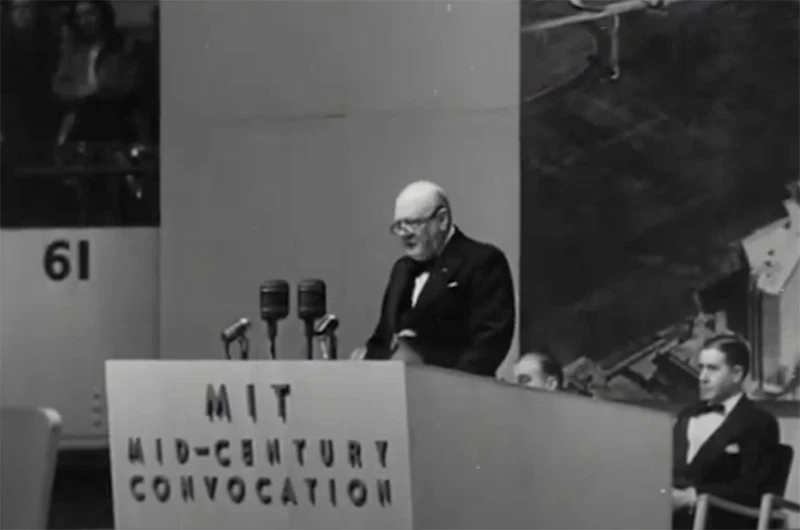
For good or for ill, air mastery is today the supreme expression of military power and fleets and armies, however vital and important, must accept a subordinate rank. This is a memorable milestone in the march of man.
Prime Minister Winston Churchill
Speech at MIT Mid-Century Convocation, Boston, 31 March 1949.
We sought no mercy and would show no mercy. We hoped to shatter twenty German cities as we had shattered Cologne, Lübeck, Düsseldorf and so on. If need be, as the war went on, we hoped to shatter almost every dwelling in almost every German city.
Prime Minister Winston Churchill
Meeting with Stalin, August 1942. He told Stalin that Britain looked upon German morale “as a military target.” Quoted by Sir Martin Gilbert in The Fifth Churchill Lecture: Churchill and Bombing Policy, at The George Washington University, Washington D.C., 18 October 2005.
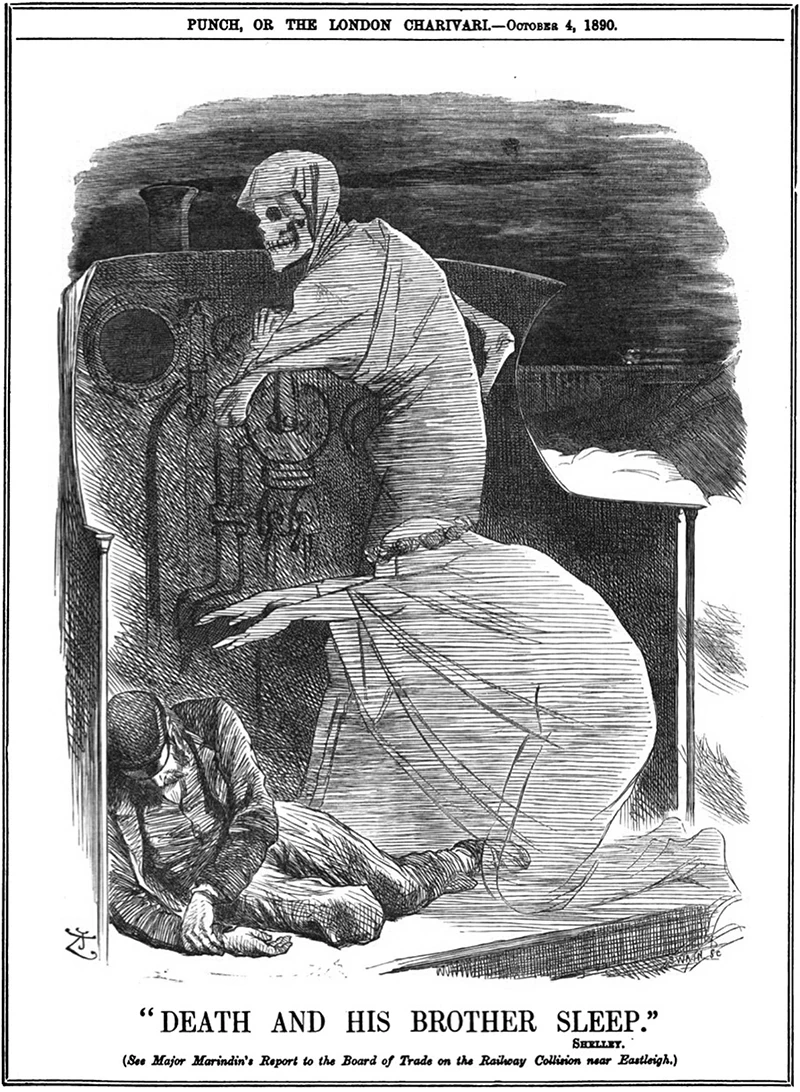
Who is in charge of the clattering train?
The axles creak, and the couplings strain.
For the pace is hot, and the points are near,
And Sleep hath deadened the driver's ear;
And signals flash through the night in vain.
Death is in charge of the clattering train!
Edwin James Milliken
First two and last four lines of a uncredited poem published in Punch magazine 4 October 1890. Now attributed to Milliken, a former engineer who became a writer and was at the time an editor at Punch. The full poem and a cartoon were published following a damning report on working conditions on the railway following a fatal accident, the driver and stoker working for over 16 hours causing them to be “asleep, or nearly so”, so missing stop signals and crashing into a freight train.
The six lines here were quoted by Sir Winston Churchill in the first volume of his epic six-volume history of World War II, The Gathering Storm (1948) to illustrate a nation asleep at the wheel.
Air predominance affords the possibility of striking at both. It can either paralyse the enemy’s military action or compel him to devote to the defence of his bases and communications a share of his straitened resources far greater than what we need in the attack.
Winston Churchill
The World Crisis, Volume III: 1916-1918, published in 1927.
In the spring of 1944 … we were masters of the air. The bitterness of the struggle had thrown a greater strain on the Luftwaffe than it was able to bear. … For our air superiority, which by the end of 1944 was to become air supremacy, full tribute must be paid to the United States Eighth Air Force.
Winston Churchill
In the 5th volume, Closing the Ring, of his book series The Second World War, 1952. Used as epigraph in the 2007 book Masters of the Air, and provided its title. Also used as the title of the TV series.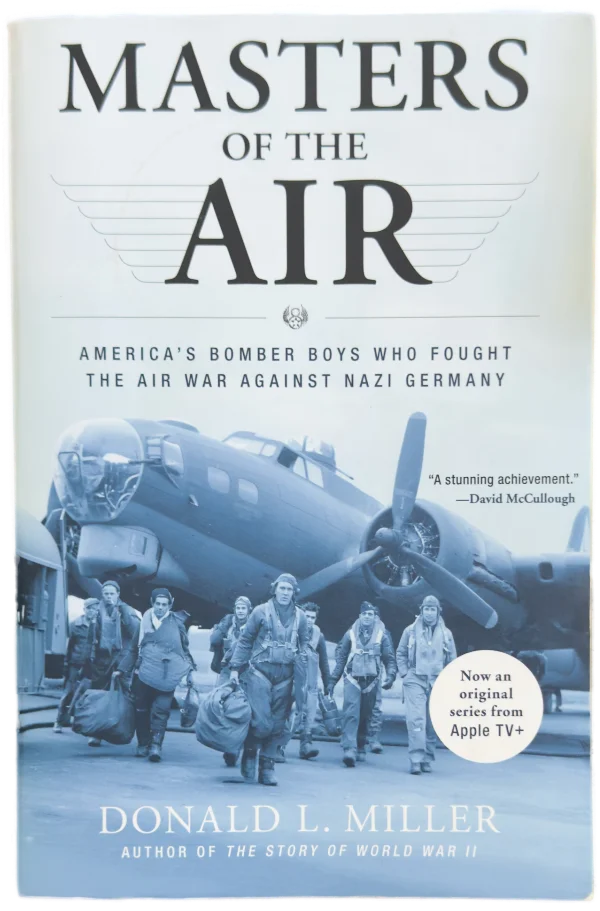
The Navy can lose us the war, but only the Air Force can win it. Therefore our supreme effort must be to gain overwhelming mastery in the Air. The Fighters are our salvation … but the Bombers alone provide the means of victory… . In no other way at present visible can we hope to overcome the immense military power of Germany.
Prime Minister Winston Churchill
Memorandum for the Cabinet, 3 September 1940.
Victory, speedy and complete, awaits the side which first employs air power as it should be employed. Germany, entangled in the meshes of vast land campaigns, cannot now disengage her air power for a strategically proper application. She missed victory through air power by a hair's breadth in 1940 … We ourselves are now at the crossroads.
Air Marshal Sir Arthur 'Bomber' Harris
Opening of letter to Winston Churchill, 17 June 1942.
See eight other Arthur 'Bomber' Harris great aviation quotes.
May it not also be that the cause of civilization itself will be defended by the skill and devotion of a few thousand airmen? There never has been, I suppose, in all the world, in all the history of war, such an opportunity for youth. The Knights of the Round Table, the Crusaders, all fall back into the past — not only distant but prosaic.
British Prime Minister Winston Churchill
Speech delivered to the Houses of Commons, 4 June 1940. This was in the famous ‘we shall fight on the beaches’ speech, that ended:
“Even though large tracts of Europe and many old and famous States have fallen or may fall into the grip of the Gestapo and all the odious apparatus of Nazi rule, we shall not flag or fail. We shall go on to the end, we shall fight in France, we shall fight on the seas and oceans, we shall fight with growing confidence and growing strength in the air, we shall defend our Island, whatever the cost may be, we shall fight on the beaches, we shall fight on the landing grounds, we shall fight in the fields and in the streets, we shall fight in the hills; we shall never surrender, and even if, which I do not for a moment believe, this Island or a large part of it were subjugated and starving, then our Empire beyond the seas, armed and guarded by the British Fleet, would carry on the struggle, until, in God's good time, the New World, with all its power and might, steps forth to the rescue and the liberation of the old.”
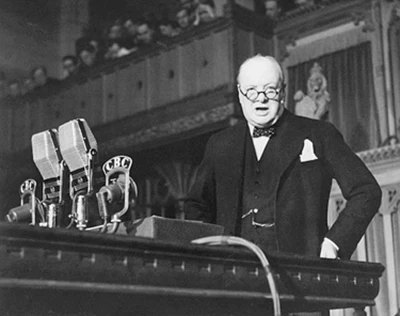
There is one branch of flying which is, to my mind, the most charming and wonderful of all, the art and sport of gliding. I am too old to practice it now; but were I a young man it would exercise an intense attraction upon me. Here you have none of the roar and whir of the petrol engine, and yet, by skil and experience, gliders can travel hundreds of miles across country and rise many thousands of feet in the air.
Winston Churchill
Aviation: Man’s Bane of Boon. The Rotarian, November 1939.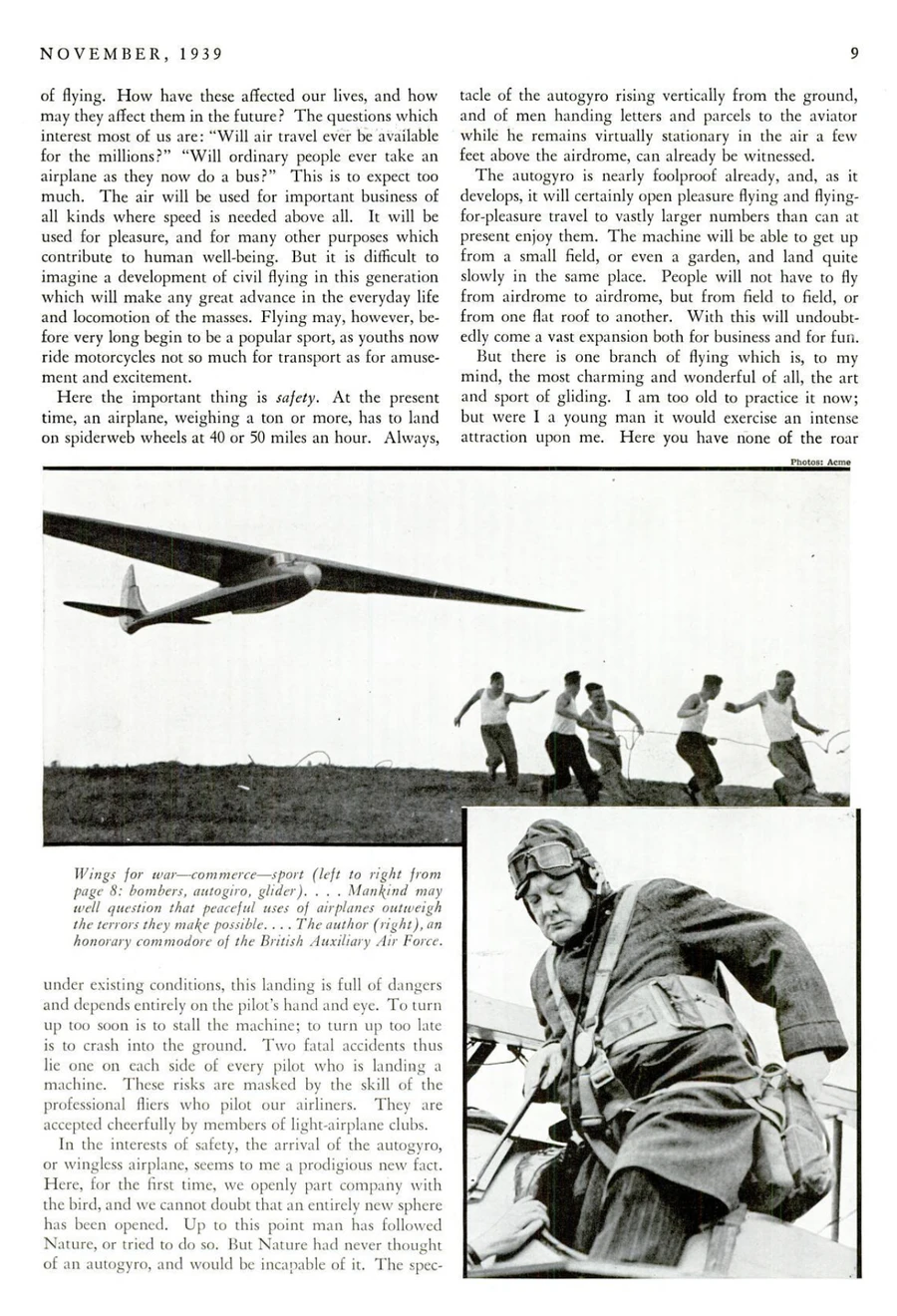
It has been reserved for us to see flying a commonplace and ordinary event. That is a great fact, because no one can doubt that the development and discovery of the flying art definitely enlarges the boundaries of human activity. One cannot doubt that flying, to judge from the position which it has reached even today, must in the future exercise a potent influence, not only upon the habits of men, but upon the military destinies of states.
Winston Churchill
Then First Lord of the Admiralty, speech at the Royal Aero Club dinner, Savoy Hotel, London. 4 March 1914. Quoted in 2005 book by his grandson Winston S. Churchill Never Give In! The Best of Winston Churchill's Speeches.
Didn’t find what you were looking for? Start again at the home page, or try another search: